Stormwater Management
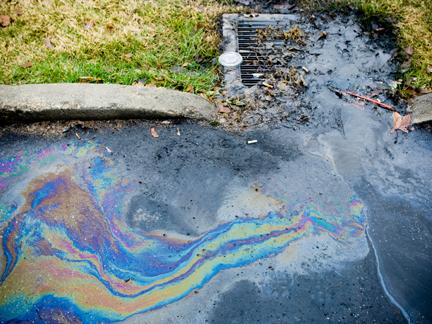
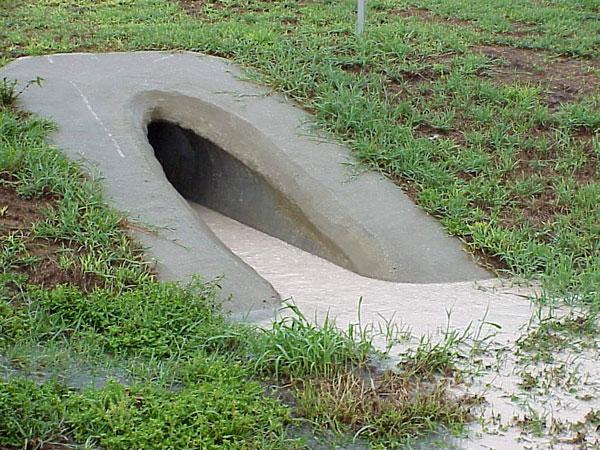
What Goes In Here.................................................................................Comes Out Here.
STORMWATER RELATED PROBLEMS
When rain falls
to the land surface in quantities that exceed the land
surface's ability to absorb, or infiltrate, stormwater
runoff is produced. The amount of runoff is dependent on the
intensity of rainfall, the length of the rainfall event and
the characteristics of the surface upon which the rain
falls. These characteristics include the slope of the land,
the land cover and the soil type(s). The magnitude of runoff
ranges depending on the characteristics of the site. For
example, a short, light rain falling on very permeable soils
may produce no runoff while a heavier rain falling on a
parking lot will produce larger amounts of runoff.
A watershed is an area of land that drains to a common point. Click Here For More on Watersheds.
For example, the Paxton Creek watershed encompasses the area of land that
drains to Paxton Creek, which in turn discharges to the
Susquehanna River. In this example, the common point to
which the watershed drains would be the mouth of Paxton
Creek at the Susquehanna River.
As the land
surface in a watershed is altered (through activities such
as clearing forests, grading, and development) runoff
characteristics change in response to the activity. For
example, if a forested area is cleared and replaced with a
parking lot (an impervious surface that does not allow for
infiltration), the amount of runoff produced in any given
rainfall event will be greater. Generally, the result of
these land alterations is increased runoff, which reaches
the receiving body of water more quickly.
This results in less water being retained in the
watershed for groundwater recharge and higher stream flows,
and potentially flooding, occurring more frequently.
Increased
stormwater runoff results in negative impacts to the stream.
Erosion of stream beds and banks may occur in response to
the increased flows. The eroded material, known as sediment,
washes downstream and can clog culverts and bridges, produce
in-stream sediment deposits, and harm the stream's ability
to support aquatic life. Eroding channels and sediment may
also lead to increased maintenance costs for nearby
infrastructure such as sewer lines, culverts, and roads.
Increased frequency of higher flows may also cause increased
frequency of nuisance flooding in addition to property
damage.
Further, runoff
often carries with it a wide variety of pollutants that are
washed from the land surface into receiving streams either
directly or through storm sewer systems. These
pollutants include sediment, phosphorous, nitrogen,
automotive fluids, deicing chemicals, cleaners, heavy
metals, and other substances. Pollutants that are washed
into the stream can negatively affect the stream's aquatic
habitat, as well as the quality of the stream water.
Poor water quality can negatively affect the
recreational value of the stream, which includes fishing,
swimming, and boating.
Increased
runoff can lead to decreased groundwater recharge, in turn
leading to decreased dry weather flows. Stream flow is
sustained by groundwater during dry parts of the year, and
precipitation lost to runoff means less groundwater
available to supply streams during dry weather. In
some cases, streams can dry up completely during these
periods. Thus, improperly managed stormwater can have
a negative impact on a stream's aquatic habitat, water
quality, aesthetics and value as a recreational resource for
swimming, boating, and fishing.
MANAGING STORMWATER At some point in the past,
Dauphin County’s watersheds were covered with forest.
Under forested conditions, stormwater is managed naturally.
Uneven terrain, an absorbent layer of organic
material covering the forest floor, forested wetlands, and
permeable soil cover all contribute to the forest’s ability
to retain rainwater. As the land was settled,
forests were cleared for farmland and settlements, which
then gave way to towns. Towns expanded and today,
development continues to expand into previously undeveloped
areas. This continued development has led to increased
impervious surfaces, and thus has diminished the ability of
rainwater to infiltrate.
This excess rainwater runs along the surface of the
land, and is known as stormwater runoff. Early stormwater management
efforts consisted of collecting stormwater and removing it
from the site as quickly as possible, typically through the
use of inlets and pipes, which conveyed stormwater to the
nearest stream.
As discussed above, the increased volumes of runoff being
delivered to streams often caused degradation of the stream. Since the early days of
stormwater management, we have learned a great deal about
stormwater runoff. Today, sound stormwater management
efforts attempt to minimize the aforementioned problems by
managing stormwater as a resource, and not as a nuisance.
After all, stormwater
is rain water, supplying not only our streams, but also our
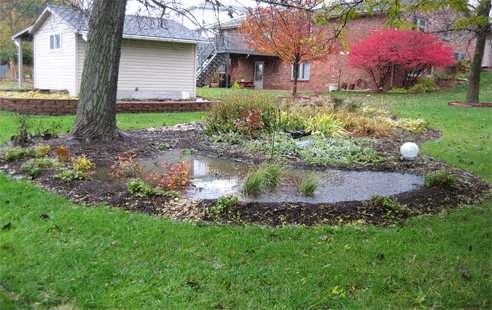
communities, with water. To accomplish this, new development uses stormwater Best Management Practices, also known as BMPs Click Here For More on BMP's. BMPs are methods and structures used in new development to infiltrate stormwater and treat stormwater before it reaches streams. These practices can be grouped into two categories; structural practices and non structural practices. STRUCTURAL PRACTICES
Structural practices include various BMPs that are
constructed to treat stormwater. Examples of these
practices include infiltration devices, inlet treatment
devices, rain gardens, swales, and pervious concrete and
asphalt. The goal of these structures is to infiltrate
or filter stormwater before it leaves a site in order to
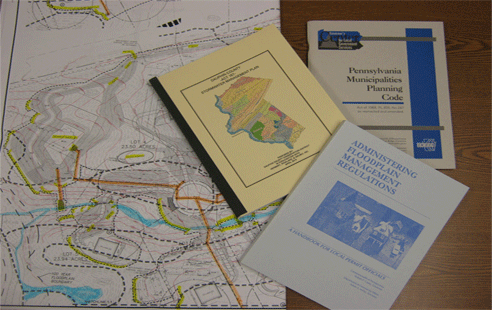
reduce the negative impacts of runoff on water resources. Structural practices, such as this rain garden, treat stormwater before it reaches a stream. (Photo courtesy of NON STRUCTURAL PRACTICES Examples of non-structural
practices include rules, regulations, and planning
instruments such as Subdivision and Land Development
Ordinances (SALDOs), Stormwater Management Ordinances,
Zoning Ordinances, and Floodplain Ordinances. The goal
of the non-structural practices is to incorporate
requirements and planning into the development process
before construction begins. A well thought out
development plan will work with the characteristics of a
development site to minimize the amount of stormwater runoff
generated and plan ahead for managing stormwater. Sound planning and working with site characteristics can minimize the adverse impacts of stormwater runoff on water resources. LOW IMPACT DEVELOPMENT Low Impact Development (LID)
strategies are another form of stormwater management and
encompass both structural and non-structural practices.
LID is a relatively recent concept, and refers to
systems and practices that use or mimic natural processes
that result in the infiltration, evapotranspiration or use
of stormwater in order to protect water quality and
associated aquatic habitat.
LID strategies aim to manage runoff as close to its
source as possible.
Some examples of Low Impact Development strategies
include rain gardens, infiltration basins, green rooves,
permeable paving, rain barrels, and bioretention basins,
among others.
For more information on LID strategies visit the
EPA LID page. WHAT THE CONSERVATION DISTRICT DOES
DCCD provides education regarding the problems associated
with stormwater runoff as well as the solutions to these
problems. The District both conducts its own workshops,
participates in workshops hosted by related agencies,
develops educational materials, and has installed a
demonstration tour of stormwater Best Management Practices
(BMPs) Click Here For More on the BMP Tour at the Dauphin County Agriculture and Natural Resources Center in In addition to the educational efforts, the Conservation District also coordinates Dauphin County Act 167 Stormwater Management planning and the Municipal Separate Storm Sewer System (MS4) compliance efforts. Click on the links below for more on these programs.
For additional resources visit our
Additional Links/Publications page. Click Here For More on Act 167 Stormwater Management Click Here for More on Municipal Separate Storm Sewer System (MS4) Regulations